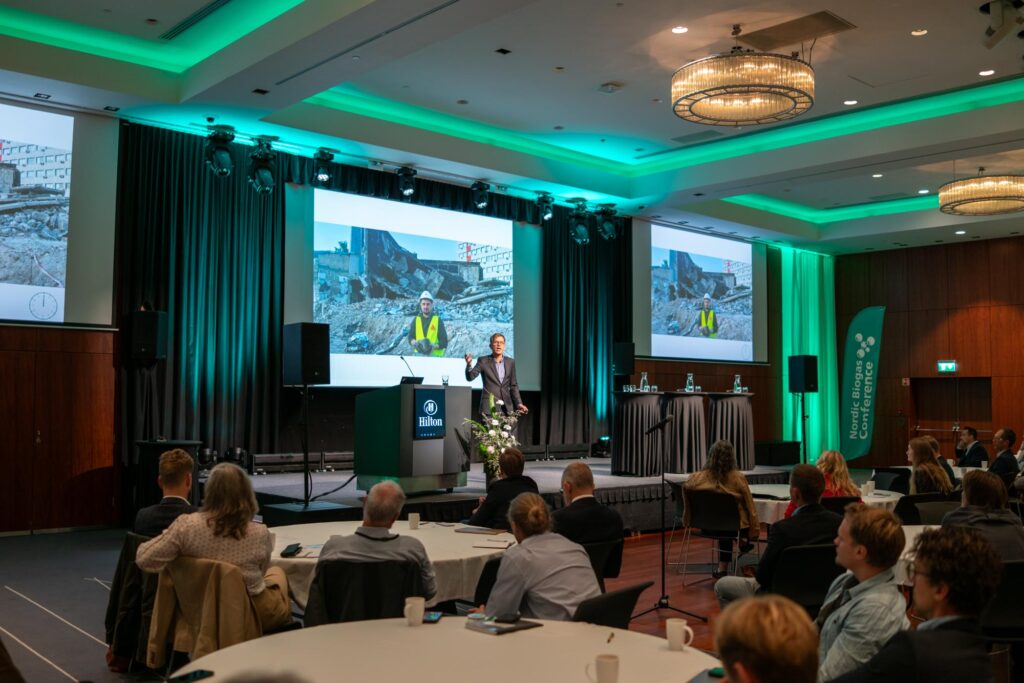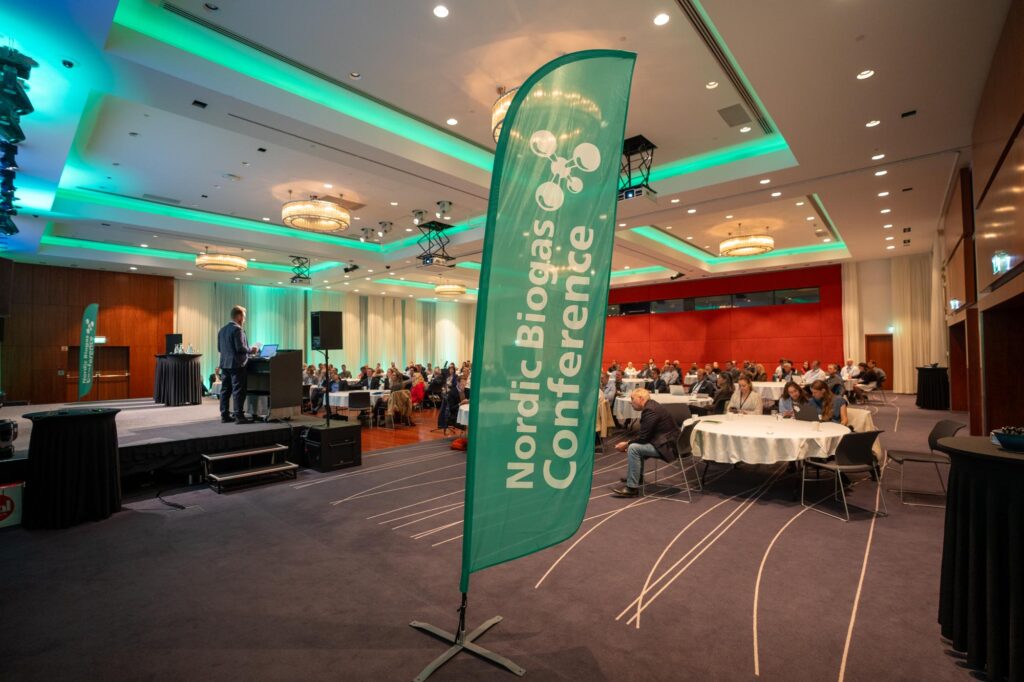



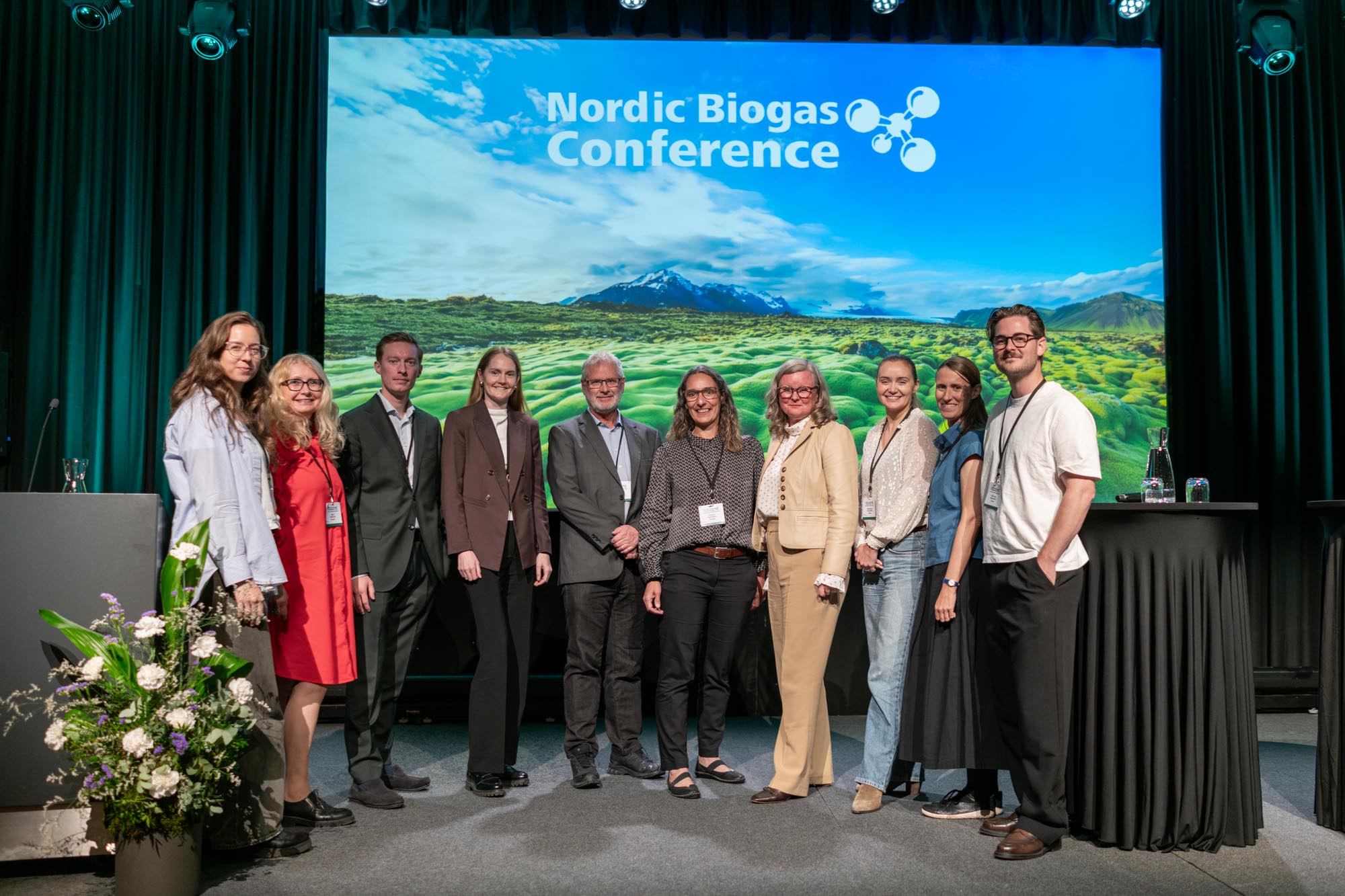
How can local resources be used more effectively to strengthen both security of supply and a circular bioeconomy? This was one of the recurring questions when Land2Value participated in the Nordic Biogas Conference in Iceland on 2–4 September.
The conference brought together companies, researchers, policymakers and other stakeholders from across the Nordic region. A clear theme was the need to make better use of local resources and reduce dependence on imported raw materials and inputs.
Biogas was highlighted as an important part of reducing dependence on fossil fuels, while circular fertilisers were identified as an opportunity to secure access to plant nutrients and reduce dependence on imported phosphorus. These issues are closely linked to Land2Value’s work to create more robust and circular value chains around agricultural biomass.
CO₂ as a resource
Another topic that received considerable attention was how carbon dioxide can be viewed as a resource rather than simply as a by-product.
Several presentations showed how captured CO₂ can be used as a raw material in industrial processes, including in the food and beverage industry. An example from the United Kingdom also demonstrated how important access to biogenic CO₂ can be for other parts of society. The UK government has recently supported the temporary restart of the Ensus bioethanol plant with more than EUR 100 million to avoid serious disruption to the national CO₂ market.
Different conditions across the Nordic countries
At the same time, the conference highlighted that the Nordic countries have different strengths and challenges.
Denmark has extensive biogas production and well-developed value chains linked to agricultural raw materials. Sweden and Norway have significant forest resources, creating opportunities for technologies such as gasification and the development of new bio-based products, although many value chains are still under development. Iceland, in turn, has major ambitions in carbon management and storage, where the country’s geological conditions create particular opportunities.
These differences between the countries are precisely what make Nordic cooperation valuable. By sharing experience, technology and working methods, solutions developed in one country can contribute to progress in other parts of the Nordic region.
From biogas plant to biorefinery
For Land2Value, an important question for the future is how today’s biogas plants and other biomass-based operations can develop towards more integrated biorefineries, where more parts of the raw material are utilised and each resource stream is used where it creates the greatest value.
This is closely aligned with the project’s ambition to develop local, circular systems in which agricultural biomass can contribute to new products, business opportunities and a more resilient bioeconomy.